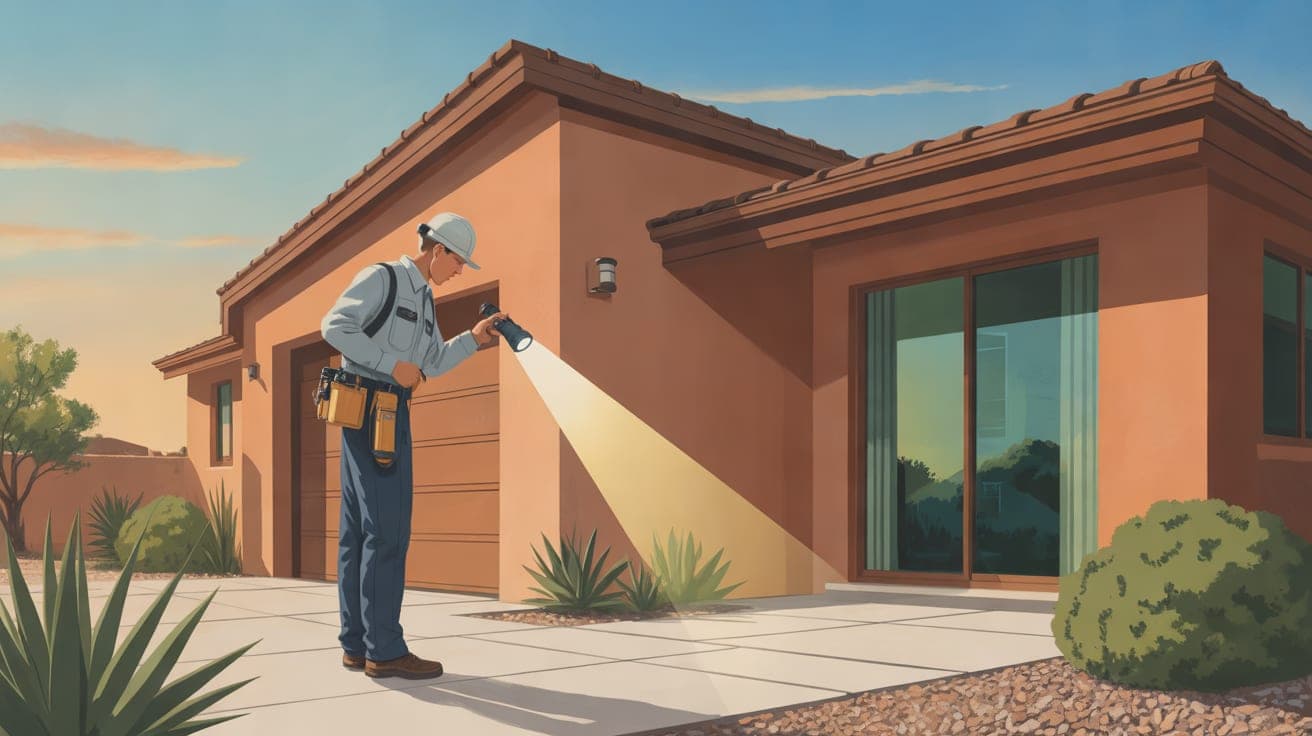
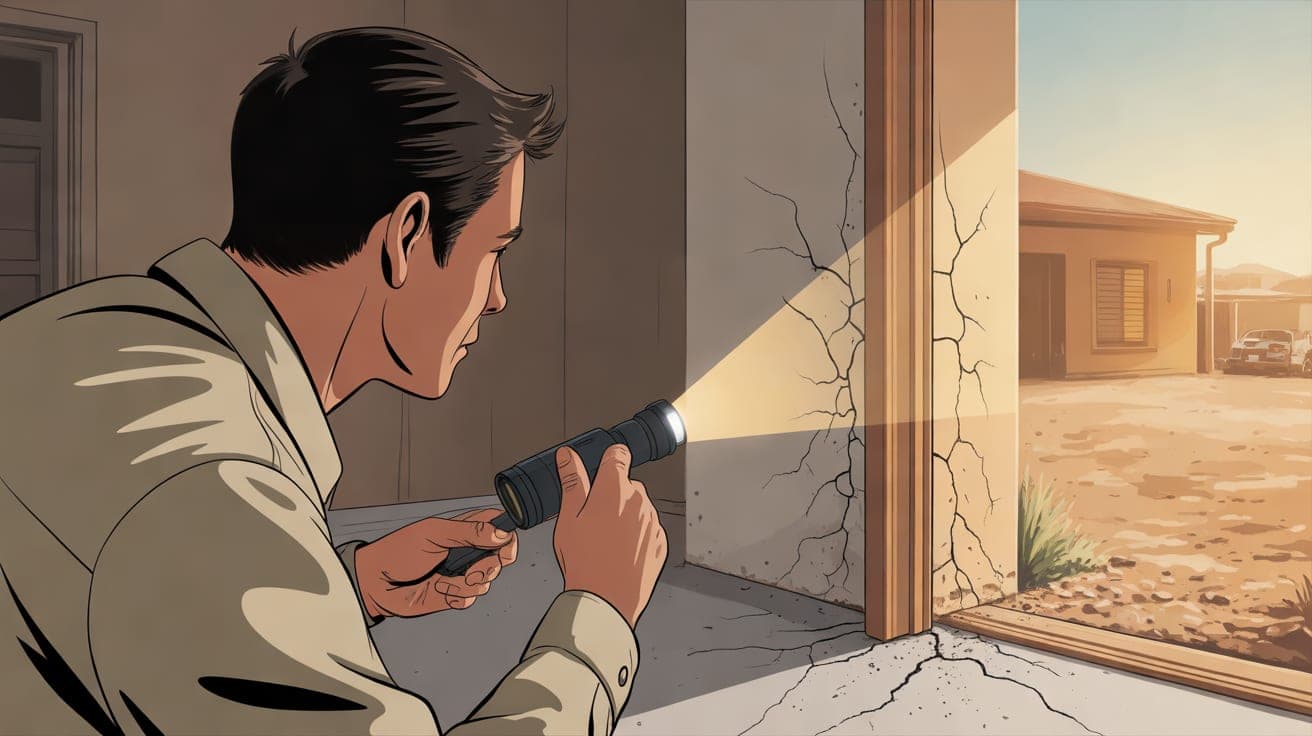
The state-mandated WDIIR page 2 diagram requirements dictate exactly what inspectors must diagram during an Arizona real estate transaction. First Inspection Termite & Pest maps all visible evidence of wood-destroying insects, conducive conditions, inaccessible areas, and existing damage on this required graph to provide buyers with a complete, property assessment.
Table of contents
- What are the mandatory WDIIR page 2 diagram requirements for Arizona property sales?
- How do inspectors decode symbols for infestations and damage on the page 2 diagram?
- Why do WDIIR page 2 diagram requirements mandate marking structural voids and inaccessible areas?
- How do page 1 findings compare with page 2 graphical disclosures?
- Frequently asked questions
What are the mandatory WDIIR page 2 diagram requirements for Arizona property sales?
Mandatory WDIIR page 2 diagram requirements dictate that inspectors must visually plot the main structure, visible termite evidence of any kind ( tubes, stains, pinholes, damage), and conducive conditions on a standardized grid. The Wood-Destroying Insect Inspection Report (WDIIR) is a legally binding document regulated by the Arizona Department of Agriculture that details the presence or absence of wood-destroying insects and conducive conditions at a property.
Page 2 of this report provides the spatial context that the written portion lacks. Inspectors draw a rough footprint of the property. The drawing must include all exterior walls, attached garages, porches. Termites frequently exploit the expansion joints where patios and driveways meet the main foundation slab, making these structural intersections critical points of vulnerability that require careful documentation.
When a homebuyer or Realtor orders an official WDIIR report, the resulting diagram serves as a tactical map of the property's visual inspection. The inspector must mark the exact locations where they observe mud tubes, damaged wood. This graphical representation allows buyers, sellers, and mortgage lenders to immediately grasp the scope of any pest pressure without having to interpret dense technical descriptions. You use this diagram to determine where the inspectors findings of termite evidence or conducive conditions exist. A great WDIIR report will also include pictures of any findings.
How do inspectors decode symbols for infestations and damage on the page 2 diagram?
Inspectors notate findings on the diagram using a standardized key of abbreviations, such as "SU" for subterranean termites or "FG" for faulty grade, placed precisely where the evidence exists on the property footprint. Because space on the grid is limited, the Arizona Department of Agriculture mandates specific abbreviations to ensure uniformity across all reports, regardless of which pest control company performs the inspection.
Common symbols include "DR" for drywood termites, "BE" for wood-boring beetles, and "CA" for carpenter ants. When an inspector finds visual evidence, they write the corresponding letter on the exact wall or corner of the diagram where the issue resides. If the inspector locates subterranean termite evidence on the southwest corner of the garage, a "SU" appears in that specific area of the drawing.

Why do WDIIR page 2 diagram requirements mandate marking structural voids and inaccessible areas?
Inspectors are not allowed to tear open walls, pull up carpet, or move any of the seller's items. If an area cannot be seen, it must be documented. Common inaccessible areas include:
- rooms packed floor-to-ceiling with moving boxes,
- locked storage closets,
- or crawlspaces with inadequate clearance.
Marking these areas protects all parties in the transaction. If you buy a home with a "clear" report, but the diagram shows the entire garage was inaccessible due to heavy storage, you accept the risk that termite damage might be hiding behind those boxes. You must weigh the risk of hidden findings inaccessible areas.
How do page 1 findings compare with page 2 graphical disclosures?
Page 1 findings provide the written, legal declarations of pest activity and structural conditions, while page 2 graphical disclosures diagram the physical locations of those written findings. You cannot properly evaluate a property by reading one page and ignoring the other. Page 1 acts as the executive summary, utilizing a series of check boxes and short text fields to state whether evidence of insects, damage, or previous treatments was observed. Page 2 translates those checked boxes into a visual reality.
If page 1 indicates "Evidence of Subterranean Termites," page 2 shows you where that finding was. If page 1 notes "Conducive Conditions" like earth-to-wood contact, page 2 pinpoints the exact wooden fence post or siding panel touching the soil, allowing you to ask the seller to correct the issues or correct the issue upon taking ownership.
| Disclosure Feature | Page 1 (Written Findings) | Page 2 (Diagram Requirements) | Buyer Decision Impact |
|---|---|---|---|
| Evidence Type | Checkboxes for active/past bugs | Specific location markers (e.g., SU, DR) | Determines if termite evidence noted and where findings are. |
| Inaccessible Areas | Listed as text (e.g., "Attic blocked") | Markers (e.g. IA, OB) placed on diagram where found. | Highlights inaccessible areas. |
| Previous Treatment | Checked "Yes" or "No" | None | Indicates if home has been treated previously. |
| Conducive Conditions | Described (e.g., "Earth-to-wood contact") | Markers (e.g. WS, FG, PA) placed on diagram where found. | Guides preventative maintenance tasks |
Page 2 provides a quick visual representation of page 1 findings.
When you require absolute certainty regarding a property's condition, First Inspection Termite & Pest delivers precise, state-compliant reporting. Our inspectors map every necessary detail, ensuring you have the data required to negotiate effectively. If treatment is necessary, we provide a quote and proposal with several options to get rid of the termites. We use the premier products of the industry such as Termidor HE, Taurus SC and Premise. Contact First Inspection Termite & Pest — (480) 778-1480 today to schedule your comprehensive evaluation.
Frequently asked questions
Do WDIIR page 2 diagram requirements apply to detached garages?
Yes, if the detached garage is included in the inspection agreement, the inspector must draw its footprint on page 2 and map any evidence of wood-destroying insects, damage, or inaccessible areas just as they do for the primary structure.
Does the page 2 diagram show the exact cost of termite repairs?
No, the page 2 diagram only provides a visual representation of the findings noted on page 1 of the report. First Inspection Termite & Pest will provide a treatment proposal to get rid of the termites and place the home under warranty. If structural damage was found, which is rare, a licensed general contractor must evaluate the areas to determine the structural integrity of the wood and provide a financial estimate for repairs.
Can a seller refuse to allow access to areas marked inaccessible on page 2?
Yes. A seller can refuse to move heavy items or unlock doors.
How long is a WDIIR page 2 diagram valid for a real estate transaction?
Due to the nature of termites, a WDIIR and its accompanying page 2 diagram are legally valid for 1 DAY. This is because termites are active 24/7 and can show up at any time. The WDIIR inspection report is a visual record of any findings (termites, conducive conditions, etc.) on that day.